domingo, 24 de febrero de 2008

Size is important in the Ski Industry

By Raúl Revuelta

I wrote in a recent article about Zermatt how ski resorts have been forced to invest and innovate to remain competitive. Today, I want to focus our attention in all Switzerland. We can found 650 mountain transport and ski lift companies in all the country. They provide access to 12,000 kilometres of ski slopes. With 11,000 employees, the companies are a key economic factor in mountain regions. All together they have a combined annual turnover of approximately SFr840 million.
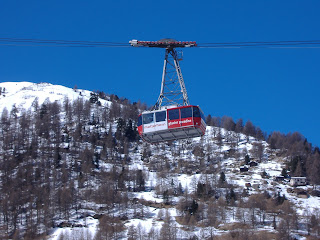

But most of the Swiss resorts can not compete in the current circunstances. Most of them are small and located in peripheral regions, they have low cash flow, an inability to attract investment capital, and are crippled by high labour costs, services and food. According to professor Thomas Bieger, head of the Institute for Public Services and Tourism at St Gallen University: "The Swiss ski industry is split into two camps: bigger companies (who managed large international resorts) that are innovative and can keep pace with global developments, and too many operators in small ski areas who don't have the means to invest". Bieger told swissinfo that consolidation is one of the answers to the problem. "Only then do you have enough money to make investments". He believes only around 20 of today's 164 medium-to-large ski resorts in Switzerland can be competitive internationally. And the large investments being made by these top 20 are reflected in the price because"If you target the wealthy, you will have stable and higher revenues in the long-run".

Zermatt is one of the Swiss leading resorts with enough capacity to invest to remain competitive, and can afford to focus its attentions on wealthy holidaymakers. But in an increasingly global industry, ski resorts need to look to the international market to found their clients. In Zermatt Swiss market still account for about one-third of all nights spent in local hotels or apartments, but tourist director Daniel Luggen says the number of Swiss visitors has decreased over the past five years and "one of the reasons is that Zermatt has increased capacity (to meet foreign demand)".

Medium-sized ski areas have important reasons to be worried about their future. First of all they do not have the capacity to draw holidaymakers from international markets. Secondly, they have not the capacity to invest in new facilities. For example a recent study found that one in three Swiss ski lift companies could not afford to upgrade its snowmaking infrastructure – considered a vital survival strategy nowadays. They need outside investors to deal with this, but investors are only interested in "integrated" models where the infrastructure – from the lifts and sport shops to the hotels and restaurants – are under single management. But there is no one company running everything in the typical Swiss resort. "Investors need to be able to make money from income streams that aren't completely snow-related", Rusty Gregory, CEO of California's Mammoth Mountain ski area explained in swissinfo: "It's very important to consolidate these income streams before [they] can bring capital in to improve the lifts and other aspects of the resort". These resorts"are only active in small markets and so it will be much more difficult for them to attract capital or foreign investors" Luggen said. "I'm convinced that some of these resorts will have to close in future".

martes, 19 de febrero de 2008

Zermatt: A leading resort in the Alps

By Raúl Revuelta

Zermatt (Valais, Switzerland) can be included in the selected group of the international destination resorts that attract skiers from all over the world. Zermatt is a car-free resort and mountain village at the foot of the Matterhorn, surrounded by an incredible landscape of mountains and glaciers.

Zermatt Bergbahnen, the largest aerial cableway company in Switzerland, understands nowadays the challenges for the ski resorts are gaining competitive advantage by being environmentally friendly and offering a quality service. On completion of a multistage auditing process carried out over a period of around one and a half years, the staff of Zermatt Bergbahnen have been granted on September 25, 2005, ISO-9001 Quality management certification and ISO-14001 Environment management certification for all enterprise areas of activity.

Also, ski resorts have been forced to invest and innovate to remain competitive; new ski lifts, snow making machines, cultural, sports and entertainment facilities and refurbished buildings are some of the necessary measures employed to render resorts more attractive. Since 2002, Zermatt Bergbahnen AG has invested CHF 105 million in transport equipment, CHF 39 million in pistes and artificial snow equipment, and CHF 34 million in property and vehicles.

On September 2007 Zermatt Bergbahnen AG reported figures substantially ahead of those reported five years ago at the time of the merger. The relatively warm winter seen again in 2006/07, with scant natural snowfall, proved the CHF 40 million in capital expenditures for artificial snow equipment to be a wise investment. An armada of over 700 lances and snow machines made it possible to open over 100 km of top-quality slopes in early December. The Matterhorn ski paradise posted record attendance for the period between Christmas and New Year's, with an additional 2,000 to 5,000 guests per day and 15,045 daily passes sold on the peak day of New Year's Eve 2006.

Matterhorn ski paradise daily pass sales for the last winter were up by 42,940 year-on-year (3.2%) to 1,368,920, and seasonal pass sales by 733,470 (7.3%) to 10,671,230. For the full-year, sales totalled 1.8 million daily passes and 12,956,230 seasonal passes. With over 2 million skiing days, the Matterhorn ski paradise is one of the largest contiguous ski areas in the world.

miércoles, 26 de diciembre de 2007

Saas-Fee, the Pearl of the Alps, a sustainable resort

by Raúl Revuelta

Saas-Fee is the main village in the Saastal, one of the most scenically beautiful and diverse valleys in the Valais and in the Alps. This car-free village lies on a high plateau 1800 metres above sea level, nestling amongst the icy dome of the Allalinhorn and the rocky group of the Mischabel chain. Their typical old Valais wooden houses create the perfect setting for winter holidays, deserving of its name “Pearl of the Alps”. Saas-Fee has some of the most restrictive building and zoning regulations in Switzerland. All buildings must have a gabled roof and at least one third of the facade of the building must be built of wood. The typical Valais style of Chalet can be maintained with these measures.


The foundation for creating a resort conscious of the environment and of quality was laid in 1951, when the community made the decision to keep the village car-free. The absence of cars in Saas-Fee contributes considerably to the relaxed holiday atmosphere and romantic character of the village where there is no stress from traffic. Guests benefit from the peace and quiet, the good quality of the air and the freedom of movement in the streets. 10 years ago, car-free resorts in Switzerland which care about a high quality of service and the environment joined forces to form the Society of Car-free Swiss Resorts. The Society (GAST in short) is a network of several car-free Swiss touristy communities (Bettmeralp, Braunwald, Riederalp, Rigi, Saas-Fee, Stoos, Wengen-Mürren and Zermatt) that promotes car-free recreation and holiday experiences in alpine resorts. The resorts commit themselves to nine decided quality criteria, which are checked regularly.

Saas-Fee committed itself to the Alliance in the Alps project as a pilot community in 1996. The Alliance in the Alps community network initiated in collaboration with CIPRA (Commission Internationale pour la Protection des Alpes) is an association comprising over 250 communities located throughout the Alpine region, from France to Slovenia. The member communities have come together in support of the goals of the Alpine Convention for sustainable development in the Alps. To this end they work in close contact with the resident populations to improve the ecological, social and economic situation in their communities.

Saas-Fee was awarded the status of Energy Town in June 2002. The label represents the introduction of actual quality control concerning communal energy policies and is awarded to towns and communities which -in proportion to the possibilities at their disposal- go to exceptional lengths to implement energy and traffic policies in their community.

Saas-Fee was the first resort in Switzerland to introduce fees for refuse bags in 1994. By means of this fee, residents are called upon to sort refuse exactly and to produce less refuse in general. Household refuse may only be disposed of in the official bags which carry a fee. 

lunes, 15 de octubre de 2007

IDE’s All Weather Snowmaker for Zermatt

by Raúl Revuelta

The financial viability of the ski resorts depends to a great extent on favourable snow conditions and the snow-reliability of its ski areas. Nowadays ski operators adopt technological measures to reduce the risks from a snow deficient winter.


Snowmaking is the most widespread strategy to extend the operating season and to secure and guarantee the revenues of the ski resorts. Zermatt Bergbahnen is the first ski resort to order a new kind of artificial snow system: the IDE’s All Weather Snowmaker.

IDE Technologies is a world leader and pioneer in water desalination, wastewater concentrators and purifiers. The snowmaking technology comes from the mining industry where it is used to cool the goldmines.

CEO Zermatt Bergbahnen Christen Baumann explains how it works: “To put it simply it works like a freezer. The temperature of the surrounding air is irrelevant. In a closed container with a diameter of 3.2m and a height of 10m, water is exposed to a vacuum without any additives. A small portion vaporizes, the remaining water freezes to snow, which is afterwards expelled at a rate of about 40 cubic metres every hour. The snow produced has the consistency of a wet spring snow”. IDE’s All Weather Snowmaker is a unique, environmentally-friendly and energy-efficient solution. The energy it requires for a year is the equivalent to that of one household.

The new snow machine, which is produced in Israel, has a delivery period of one year and costs around CHF 2 million (EUR 1.19 million). It will be put into operation at the end of September 2008 to offset the bad snow conditions of the late autumn in the glacier piste. As Daniel Loggen, Director of Zermatt Tourism, says “We want to offer our guests perfect skiing enjoyment – so the innovation has come at just the right time”.